
Executive Summary
For the better part of five years, the boardroom directive across Frankfurt, Paris, and London was deceptively simple: Diversify. Spooked by the trade wars of the early 2020s, the trauma of zero-COVID lockdowns, and the creeping realization of geopolitical fragility, European conglomerates initiated a historic capital flight. They looked at a map of Southeast Asia and saw an escape hatch. Vietnam was the new assembly floor; Malaysia, the new Silicon Valley; Thailand, the automotive safe haven. The strategy was dubbed “China Plus One,” a phrase that implies a simple addition to an existing equation, a neat, modular expansion of capacity.
But as we close 2025, the map looks different. It is no longer an open frontier of cheap labor and tax holidays; it is a congested parking lot. The “easy wins” have been eroded by a reality that few risk assessments accounted for: the physical and human limits of the host countries. The migration is complete, but the infrastructure required to support it is groaning under the weight of its own success. We are now entering the era of China Plus One 2.0. In this new phase, the primary risk to supply chains is no longer the political decoupling from Beijing, but the operational exhaustion of Southeast Asia. The narrative has shifted from where to invest to how to survive the bottlenecks of your new home. For European decision-makers, the challenge of 2026 will not be leaving China, but arriving in Southeast Asia without destroying your margins.

The Northern Gridlock: Vietnam’s Power Paradox
Nowhere is the gap between ambition and reality more palpable than in Northern Vietnam. For a decade, this region, encompassing the industrial hubs of Bac Ninh, Bac Giang, and Thai Nguyen, has been the poster child of the manufacturing exodus. It is where Samsung makes its phones and where Apple’s suppliers assemble the devices that run the modern world. But this industrial miracle was built on a fragile foundation: a power grid that simply cannot keep pace with the double-digit growth of energy-hungry factories.
The recent crisis is not an anomaly; it is a structural failure rooted in the paralysis of planning. Despite the optimistic projections of the revised Power Development Plan VIII (PDP8), ratified in mid-2023 and amended in April 2025 via Decision No. 768/QD-TTg, the implementation of renewable energy projects has been paralyzed by regulatory gridlock. The “Burning Furnace” anti-corruption campaign, while laudable for long-term governance, has had a chilling effect on the bureaucracy. Officials, terrified of scrutiny, have frozen the approval processes for major wind and solar projects, leaving billions of dollars of potential capacity stranded on paper. By the third quarter of 2025, the Ministry of Industry and Trade admitted that power supply growth was tracking at 11%, yet demand during peak dry season periods surged past 15%.
Vietnam’s Grid Paralysis
Critical DeficitSevere grid imbalances in Northern industrial hubs (Bac Ninh, Bac Giang) are forced to rely on dirty coal or seasonal hydro. Voltage drops disrupt precision electronics.
Consequently, the grid remains dangerously reliant on a mix of coal and hydropower. This dependence has created a “perfect storm” scenario that we saw play out in the sweltering months of mid-2025. Recurring heatwaves drove record cooling demand from the residential sector while simultaneously evaporating the reservoirs needed to spin the hydro turbines. The result was a series of unannounced brownouts that sent shockwaves through the foreign investor community. The delayed completion of the 500kV Circuit-3 transmission line, intended to bring surplus power from the South to the North, exacerbated the deficit. While the line is now technically operational, the transmission losses and synchronization issues mean it is not the silver bullet many hoped for.
Consequently, the grid remains dangerously reliant on a mix of coal and hydropower. This dependence has created a “perfect storm” scenario that we saw play out in the sweltering months of mid-2025. Recurring heatwaves drove record cooling demand from the residential sector while simultaneously evaporating the reservoirs needed to spin the hydro turbines. The result was a series of unannounced brownouts that sent shockwaves through the foreign investor community. The delayed completion of the 500kV Circuit-3 transmission line, intended to bring surplus power from the South to the North, exacerbated the deficit. While the line is now technically operational, the transmission losses and synchronization issues mean it is not the silver bullet many hoped for.
For a precision electronics manufacturer, a voltage fluctuation lasting mere milliseconds can ruin an entire production batch of semiconductors or circuit boards, costing millions in waste and weeks in recalibration. This fragility has introduced a “hidden tax” on operations in 2025. European firms entering the market are finding that the low cost of labor is increasingly offset by the high cost of resilience. They are forced to invest heavily in industrial-scale diesel generators and Battery Energy Storage Systems (BESS), effectively building their own micro-grids because the national utility, EVN, can no longer guarantee stability. The lesson for 2026 is stark: do not take “guaranteed power supply” clauses in your industrial park contract at face value. In a national load-shedding event, the grid operator’s stability protocols will always override private contracts.
The Human Capital Trap: Malaysia’s Talent Deficit
If Vietnam’s bottleneck is hardware, Malaysia’s bottleneck is software. Specifically, the human brains required to run a high-tech economy. Malaysia has successfully positioned itself, particularly the state of Penang, as the “Silicon Valley of the East,” attracting massive Foreign Direct Investment (FDI) in semiconductor packaging and testing. The government’s National Semiconductor Strategy (NSS), launched with fanfare in May 2024, is ambitious, aiming to train 60,000 high-skilled engineers by 2030 to staff the gleaming new fabs rising from the jungle.
However, the math does not add up. As we survey the landscape in December 2025, the country is producing only about 5,000 industry-ready engineering graduates annually, a fraction of the demand. This scarcity has ignited a brutal war for talent that is destroying the labor arbitrage that drew companies to Malaysia in the first place. The gap between the 60,000 target and the current run-rate is widening, not closing, leading to a cannibalistic labor market where firms poach staff from their neighbors in the Bayan Lepas Free Industrial Zone.
Malaysia’s Engineering Shortfall
Severe DeficitThe National Semiconductor Strategy (NSS) targets 60,000 high-skilled engineers by 2030, but current local graduation output is severely insufficient.
Singapore Wage Vacuum: Proximity to Singapore sucks top Malaysian engineering talent south immediately upon graduation, hollowing out mid-level seniority.
The root of the problem is geography and economics. Malaysia shares a border with Singapore, a global magnet for talent that offers wages three to four times higher than what is available in Penang or Johor. This proximity acts as a relentless vacuum, sucking the “best and brightest” Malaysian graduates south of the border immediately after they receive their diplomas. The result is a “hollowed out” workforce where mid-level seniority is almost non-existent. You have fresh graduates who are too green to manage complex lines, and expensive senior managers nearing retirement. The “middle layer” of competent, 5-10 year experienced engineers has largely migrated.
For European firms, this manifests as rampant wage inflation and dangerously high turnover rates. Reports from late 2025 indicate that “job hopping” has become endemic, with engineers demanding 20% to 30% salary increments to switch firms, sometimes moving jobs every six months. To plug the gap, companies are forced to import expatriate engineers, a costly solution that nullifies the cost advantages of relocating to Malaysia. The strategic implication for 2026 is that the era of “cheap” engineering in Malaysia is over. Investors must pivot their HR strategy from recruitment to development. The only firms succeeding in this environment are those that treat talent not as a resource to be bought, but as a crop to be cultivated. They are partnering with local universities to lock in students years before graduation and, crucially, they are investing in automation. If a facility planned for 2026 relies on manual high-skill labor, it is already obsolete. The winners will be those who use automated testing equipment to reduce their dependency on a labor market that is structurally broken.
The Physical Squeeze: Thailand’s Logistics Gridlock
While Vietnam struggles with power and Malaysia with people, Thailand is facing a crisis of space. The Eastern Economic Corridor (EEC) – the provinces of Chonburi, Rayong, and Chachoengsao – was supposed to be the seamless logistics hub of ASEAN. Instead, it has become a bottleneck of inventory bloat. The region is suffering from the unintended consequences of the electric vehicle (EV) revolution, specifically the aggressive entry of Chinese automakers.
The root cause lies in the shift from “Just-in-Time” to “Just-in-Case” manufacturing, compounded by a massive influx of Chinese EV inventory. In 2024 and 2025, manufacturers such as BYD, Changan, and GAC Aion rushed to establish footholds in Thailand to bypass Western tariffs on Chinese-made cars. However, domestic adoption in Thailand has slowed due to high household debt, and export markets are tightening. The result is thousands of unsold electric vehicles sitting in parking lots and warehouses across the EEC. This “inventory glut” has absorbed a massive percentage of the available logistics capacity.

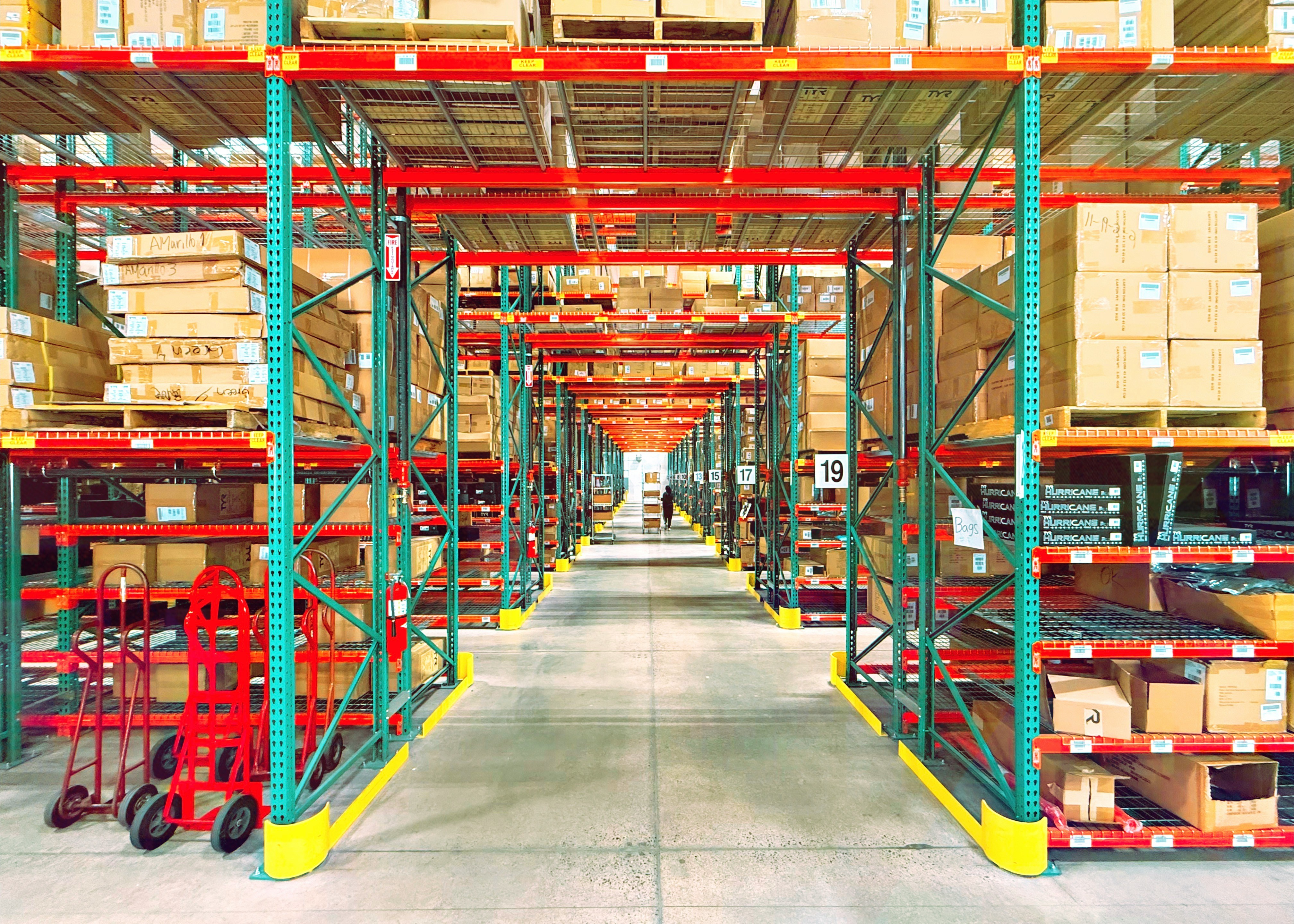
Thailand Warehouse Crunch (EEC)
Grade A Space ScarcityAn influx of unsold Chinese EV inventory and shifts to “Just-in-Case” manufacturing have absorbed prime logistics space, pushing rents up and vacancy rates down.
By the third quarter of 2025, vacancy rates for “Grade A” warehouses (modern, high-ceiling facilities capable of automation) plummeted below 9% in key logistics corridors. Land prices in prime EEC zones have stabilized at high levels, but the availability of contiguous plots for large-scale European factories is shrinking. This accumulation of “safety stock” has triggered a run on warehousing that the real estate market was not prepared for. Manufacturers have been forced to hold significantly more inventory, often 20% to 40% more raw material than they did in China, to buffer against the unpredictable delays of a fragmented supply chain.
The result is a “logistics apartheid.” Large conglomerates are building their own private warehousing estates, insulated from the market. Small and medium-sized European enterprises, however, are left fighting for scraps in older, less efficient facilities that lack climate control or modern loading docks. For 2026, the advice is clear: to go long on space. If there’s the planning of a factory, it’s advisable to build the warehouse bigger than current models suggest, and lock in logistics contracts now. The spot market for storage in the EEC is becoming a punitive environment for the unprepared. The days of easily finding a 10,000 square meter facility near Laem Chabang Port are over; either build it yourself or pay a premium to displace a Chinese EV competitor.
The Invisible Minefield: Transshipment and the “Labeling Trap”
Perhaps the most dangerous bottleneck of all is the one you cannot see until it explodes: the geopolitical risk of “transshipment.” As the United States and the European Union tighten their trade restrictions on China, through tariffs, the Uyghur Forced Labor Prevention Act, and the Carbon Border Adjustment Mechanism (CBAM), they are casting a suspicious eye on Southeast Asia. Regulators in Washington and Brussels are increasingly viewing Southeast Asian exports not as the products of a diversifying world, but as a shell game, a mechanism for “laundering” Chinese goods to avoid tariffs.
The data supports their suspicion. In 2025, we saw a stark correlation: while US imports from China plummeted, US imports from Vietnam and Malaysia skyrocketed. Simultaneously, Chinese exports to Vietnam and Malaysia surged. To a customs auditor, this looks like transshipment: shipping Chinese goods to Vietnam, slapping a “Made in Vietnam” sticker on them with minimal value addition, and re-exporting them to the West. The warning shot was fired in the solar industry. In April 2025, the U.S. Department of Commerce finalized severe anti-dumping duties on solar cells from Vietnam, Thailand, Malaysia, and Cambodia, arguing they were essentially Chinese products. Tariffs on specific companies like Jinko Solar (Malaysia) and Trina Solar (Thailand) hit double and triple digits, effectively freezing their export viability to the US market.
Geopolitical Circumvention Matrix
Compliance AuditHow customs authorities audit Southeast Asian exports. “Labeling assembly” is increasingly hit with punitive tariffs, whereas true local transformation remains safe.
Labeling Assembly Only Importing 90%+ of components from China, performing minor assembly, packaging, or simple finishing.
True Local Sourcing Sourcing significant parts of raw material locally or from non-China entities (Japan, EU, Taiwan).
Opaque Supply Chain Relying on tier-1 suppliers without visibility into sub-component origins (e.g. copper, silicon).
Supply Chain Mapping Multi-tier mapping down to chemical/raw material origin to clear audits (e.g. UFLPA, CBAM).
Punitive Tariffs Double or triple-digit anti-dumping duties (as seen in solar cell rulings on Jinko, Trina).
Tariff Exemption Exemption under rules-of-origin thresholds via documented domestic value-add.
This precedent is now expanding to aluminum, steel, and consumer electronics. We are seeing increased “hold and inspect” orders at Western ports for goods originating from Southeast Asia. Under the revived “America First” trade policy gaining traction in late 2025, blanket tariffs of 10-20% on ASEAN nations are being discussed as a tool to force supply chain transparency. If a company cannot prove that “substantial transformation” occurred in the host country, their cargo sits on the dock, and their reputation is tarnished.
This creates a perilous environment for “China Plus One” strategies that are merely assembly operations. If your factory in Vietnam is importing 90% of its sub-components from your old factory in Shenzhen, you are standing on a geopolitical fault line. To survive in 2026, firms must do real manufacturing. They must source a significant percentage of inputs locally or from non-China sources, such as Japan, South Korea, or Taiwan, to meet strict “Rule of Origin” thresholds. “China Plus One” is not a shield against tariffs if the “One” is just a warehouse for Chinese components. The compliance burden has shifted; there’s now the need to map the suppliers’ suppliers, ensuring that the copper in the wire harness or the silicon in the chip produced did not originate in a sanctioned entity before arriving in Bangkok.
The Resilience Imperative
The era of “cheap and easy” in Southeast Asia is definitively over. The region remains the most viable alternative to China, but the nature of the opportunity has fundamentally changed. It is no longer a cost-arbitrage play; it is a resilience play that requires significant upfront investment and strategic foresight. The “China Plus One” strategy was conceived as a way to reduce risk, but in its execution, it has introduced a new set of operational risks that are just as lethal to profitability.
The winners in 2026 will not be the companies that moved the fastest, but the ones that built the most shock-absorbers into their new homes. They will be the firms that audited the power grid before signing the lease, realizing that a cheap kilowatt-hour is worthless if it isn’t available. They will be the companies that invested in training academies to create their own talent, refusing to participate in the wage-inflation spirals of Penang. They will be the strategists who secured warehousing space for a “Just-in-Case” world, recognizing that logistics is now a competitive moat. And they will be the compliance hawks who cleansed their supply chains of geopolitical liability, ensuring that their “Made in Vietnam” label can withstand the scrutiny of a U.S. Customs audit.
The door to Southeast Asia is still open, but the waiting room is full, and the price of admission has gone up. For European decision-makers, the time for theoretical diversification is past. The task now is the hard, granular work of bottleneck management. The honeymoon is over; the marriage of necessity has begun, and it will require work to sustain.
References & Sources
| Vietnam MoIT & EVN | Official amendments to PDP8 (Decision No. 768/QD-TTg, April 2025) and electricity supply/demand updates. moit.gov.vn | Official Report |
| Malaysia MITI | National Semiconductor Strategy (NSS) progress report, graduate output metrics, and Singapore brain drain statistics. miti.gov.my | Official Report |
| Cushman & Wakefield / JLL | Thailand Industrial MarketBeat (Q2/Q3 2025) detailing warehouse vacancy rates below 9% in prime EEC corridors. cushmanwakefield.com/thailand | Market Research |
| U.S. Dept of Commerce | Federal Register Final Determination of Antidumping Duties on Silicon Solar Cells from Southeast Asia (April 2025). commerce.gov | Legal Ruling |
| Krungsri Research | Thailand Logistics & Warehousing Outlook (2025-2027), analyzing safety stock land price dynamics. krungsri.com/research | Official Report |
| Mordor Intelligence | Vietnam Power Sector Report (2025) and Malaysia E&E semiconductor salary and wage inflation forecasts. mordorintelligence.com | Market Research |
| Dimerco Supply Chain | US Tariff Updates and compliance audits for rules-of-origin substantial transformation. dimerco.com | Legal Update |